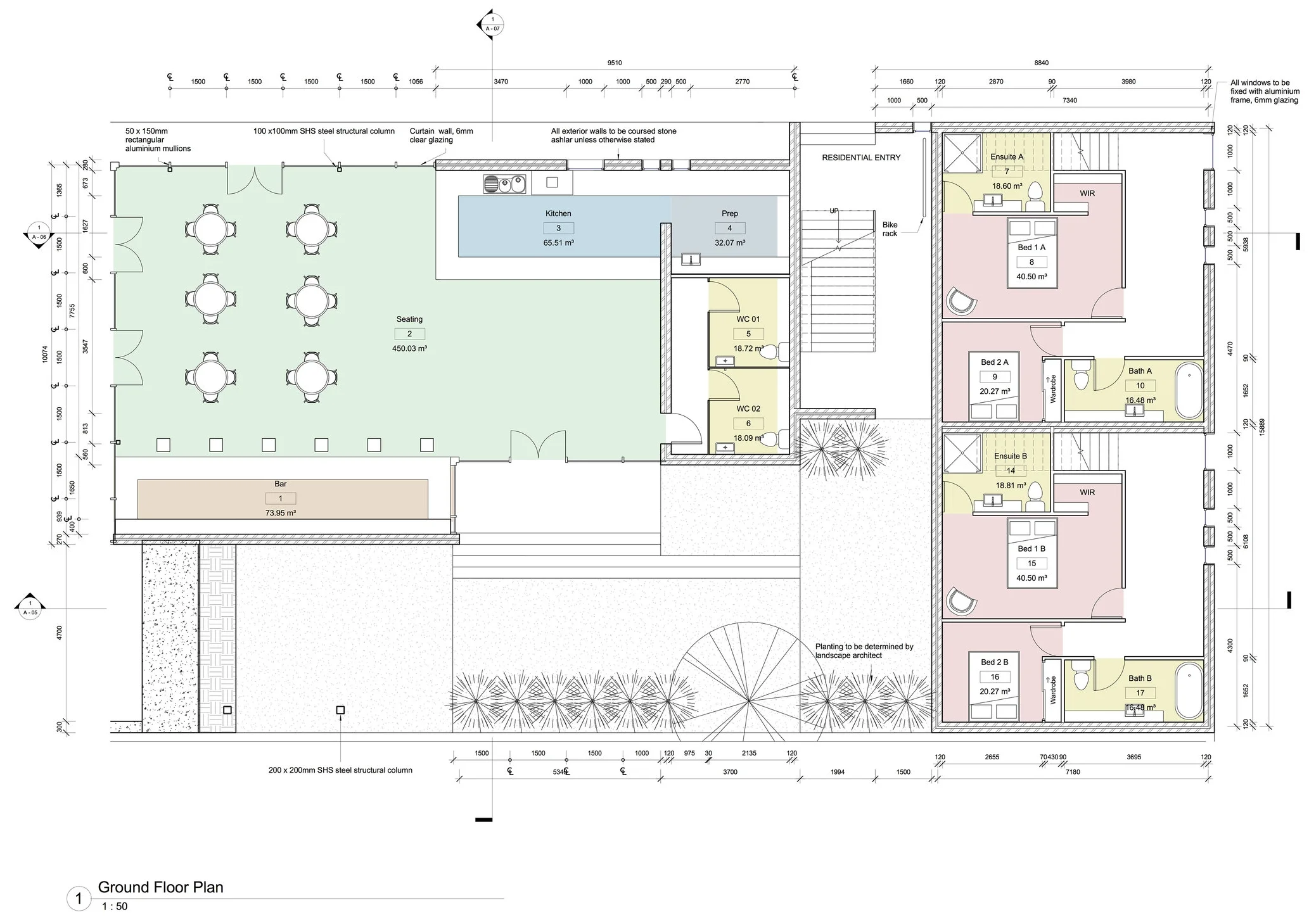
A small co-housing development in the middle suburbs of Sydney, re-examines the potential for architecture to exist within a transitionary framework. Architecture and urbanism has traditionally been defined by permanence and absolutes as a default condition, but why should this be the case when change, adaptation and flexibility are now recognised as fundamental to balancing both the present and future needs of our modern society?
The project embodies an architecture of dynamic transitions and thresholds, that which might more closely reflect the subtleties of human psychology. Hinged spaces allow selective control of privacy between dwellings, communal spaces and their occupants, hence facilitating healthy interactions, sharing and community beyond simply the open and closed.
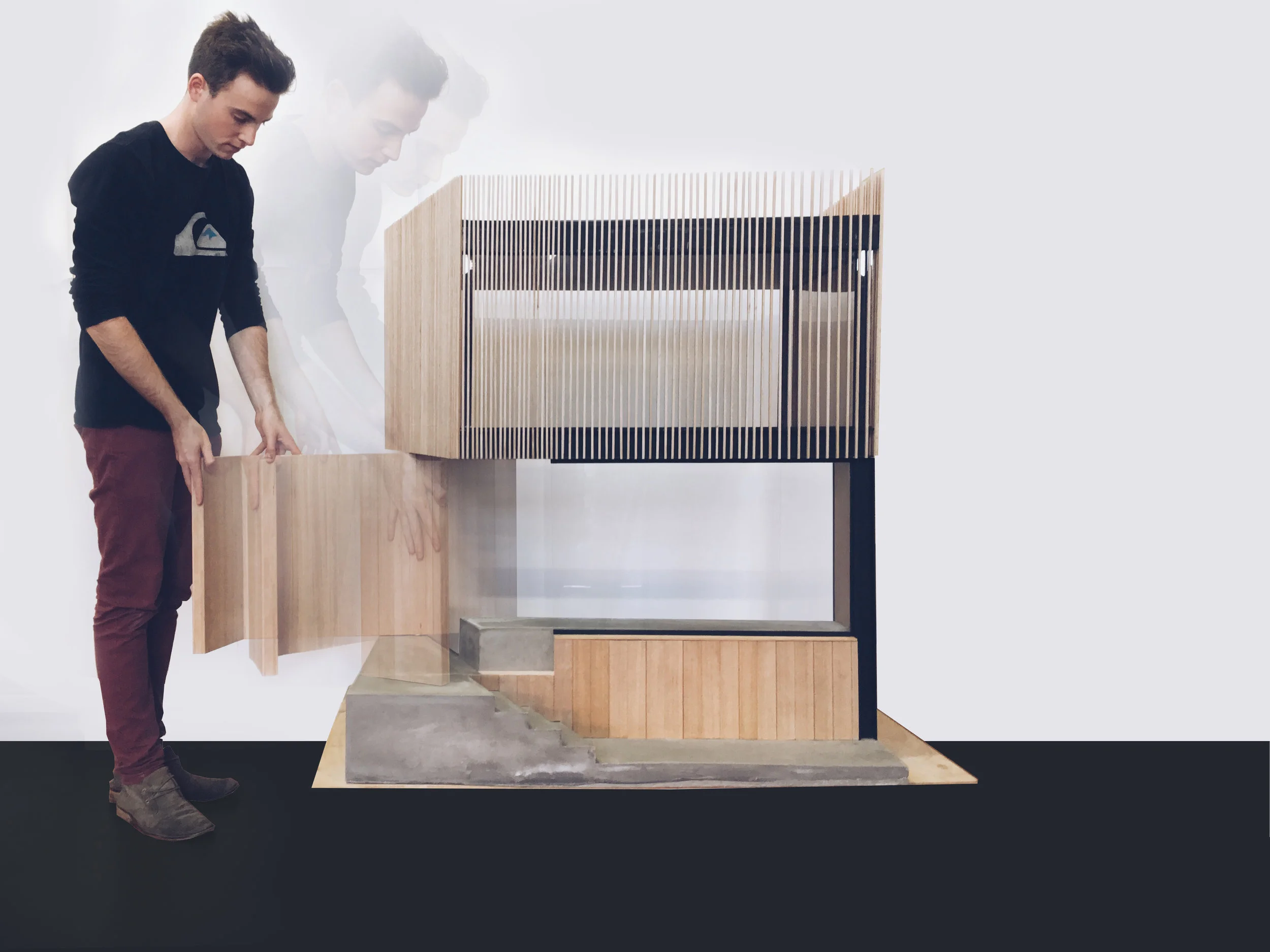
The 1:5 kitchen detail model is made of local Tasmanian Oak, welded aluminium sections (matte-black finish) and a plaster cast base - a total weight of approximately 80kg.
Architectural Fabrications // UNSW - 3rd Year.