ARKNAT 2018 // Collaborators: Mattias Larsson, Isa Lopes, Kristina Rogers, Linnea Henstam
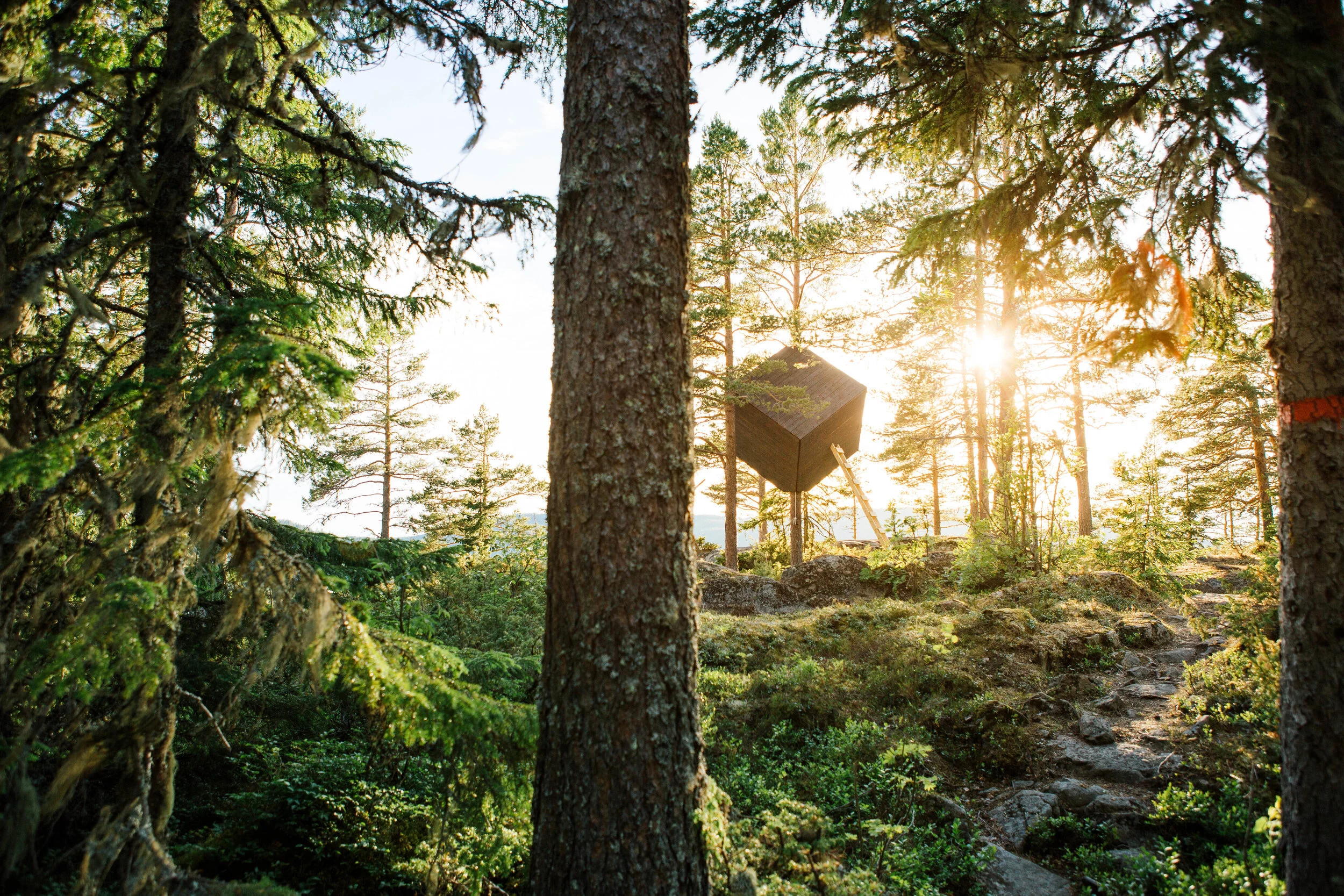
Körningsberget has beautiful views all round. The concept began with the wish to create another experience bynot competing with the natural use and beauty of the site. By stepping back and leaving the front viewing platform untouched a floating structure was derived – a treehouse, introducing a new, playful shelter and viewing platform to the High Coast. It is an intriguing structural object, inviting curious hikers to climb up and enjoy the special shelter amongst the tree tops.
The geometry arose from structural necessities, optimised for durability, sculptural aesthetics. The result is a 2x2x2 metre abstract cube, with an exterior facade treated with a vernacular technique of charring wood prolonging the lifespan of the cube. The form also becomes a natural cradle for the human body, creating a comfortable experience and interesting and contrasting interior.
The windows of the tree house are placed to frame specific views such as the lake, the sunset and the dense forest. It will act a cosy place to seek shelter when it rains or even spend the night. The pine tree is the core component to the space. The tree and the structure are working together, holding the treehouse up while also being considerate to the health of the tree. You will feel the movement with the wind and fall asleep watching the stars through the roof window.
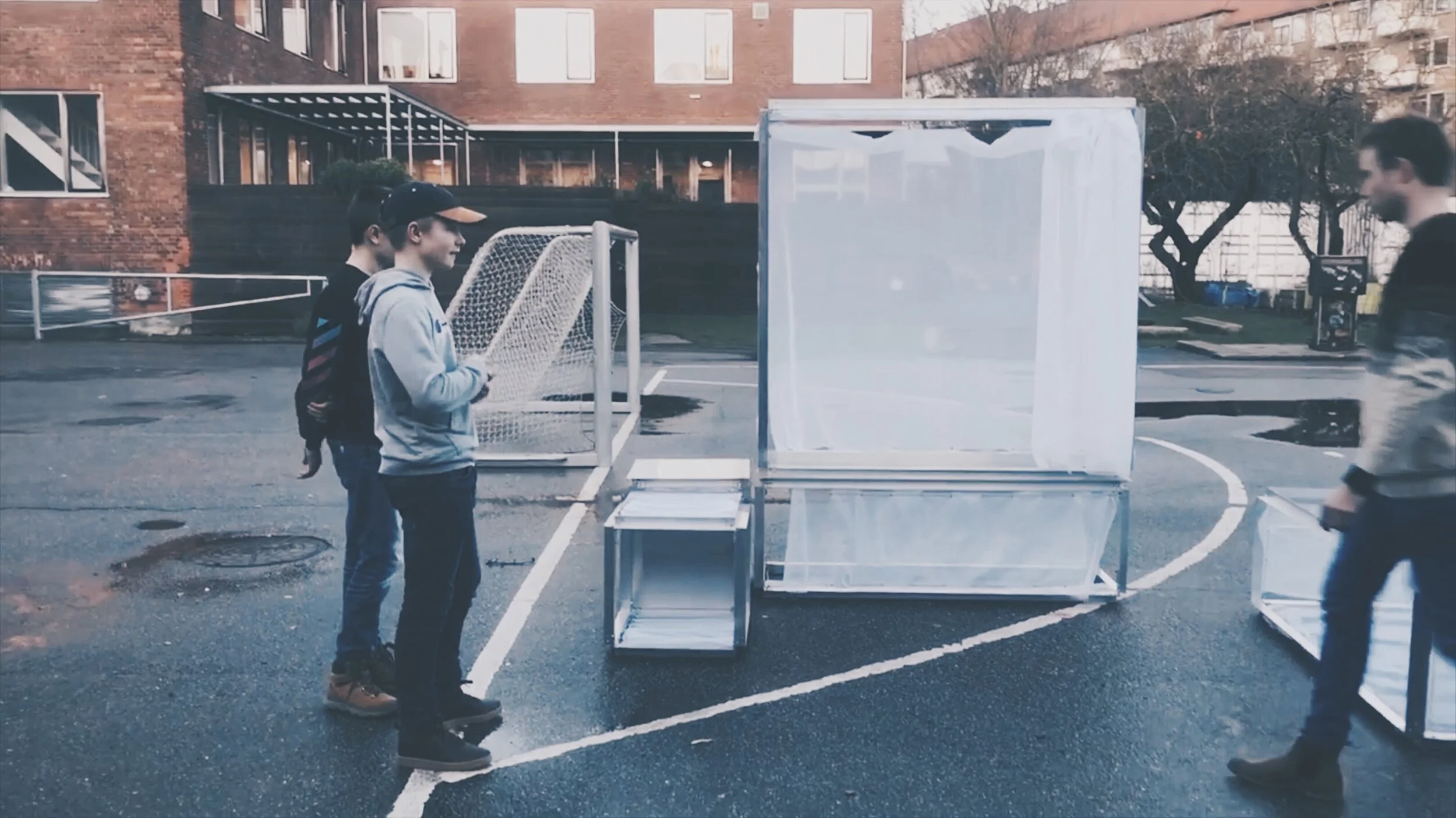
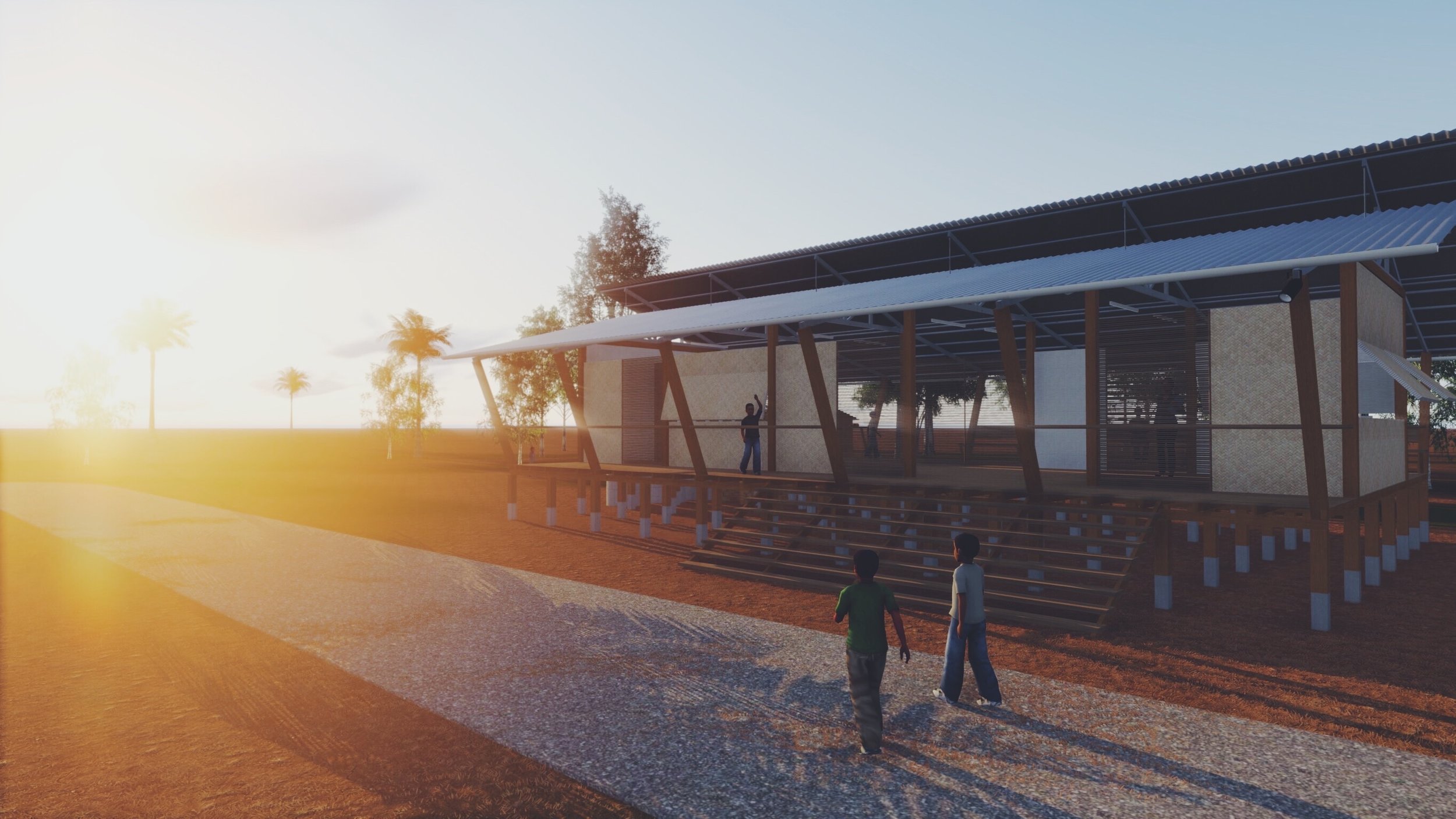
The intention of the project was to work closely with a local youth hub in Copenhagen, creating a series of interventions in the public space for the youth of Nordvest, facilitating empowerment and renegotiating their territory in the greater community.
Small scale architectural interventions and 1:1 prototypes have the strategic potential to avoid planning, approval and development processes. Intervening at this scale, we can move faster than the process of gentrification itself, using objects as spatial instigators and catalysing the positive development of the area.
As designers working within the development of Nordvest, the major objective is to find ways to relieve social tensions and to build new social relations of trust and cooperation.
Collaborative Design Processes // KADK+CBS - 4th Year.
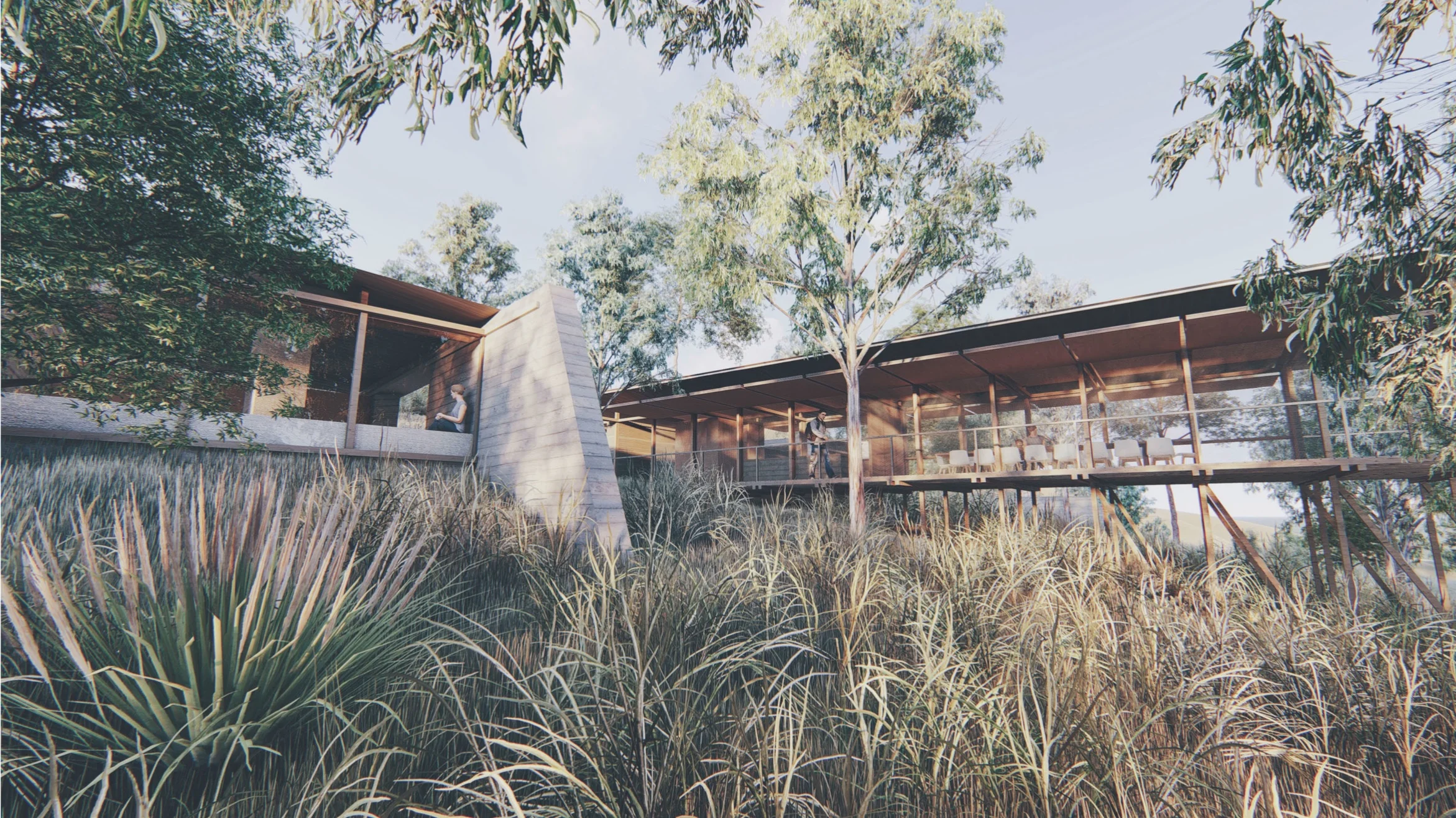
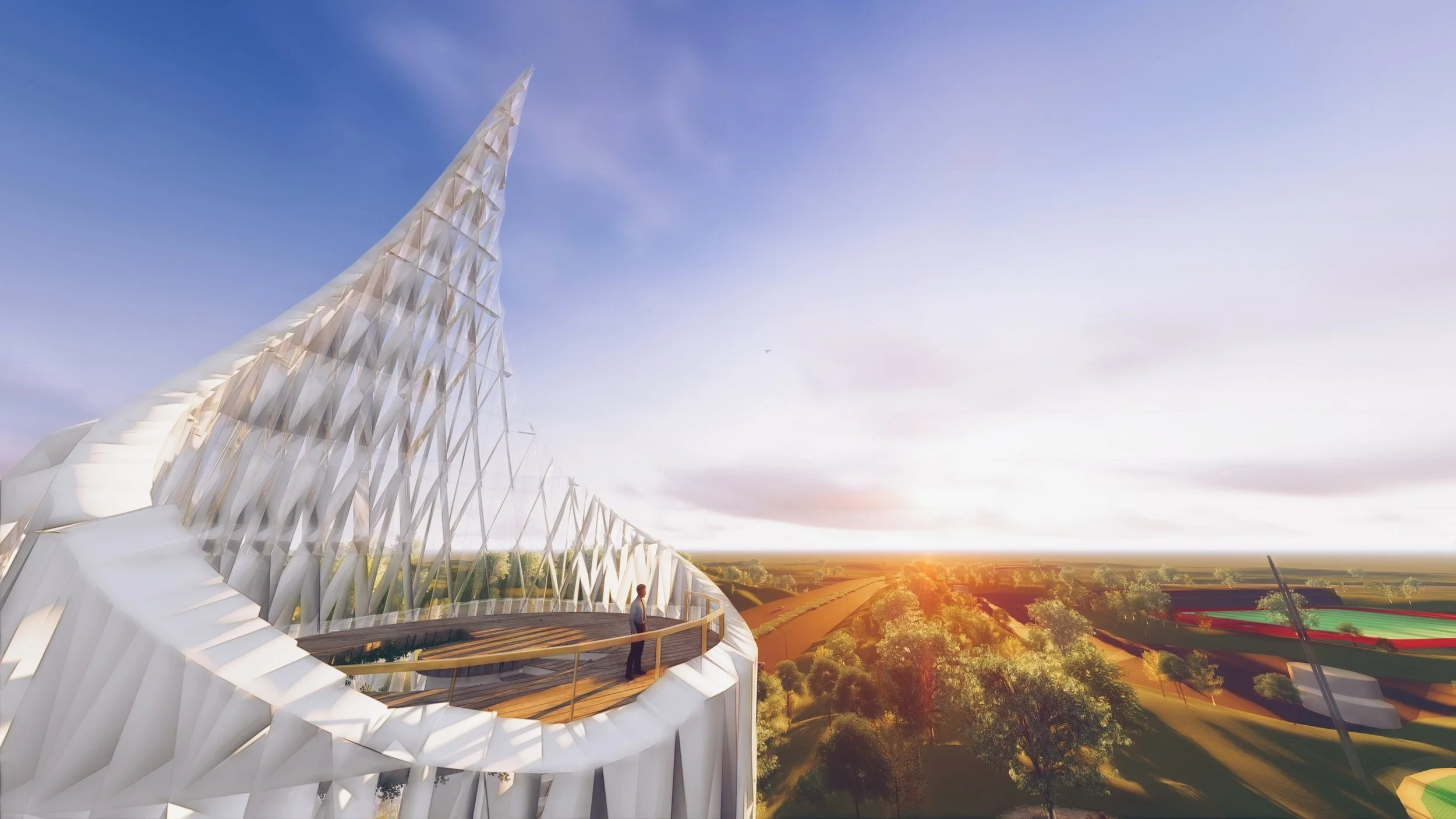
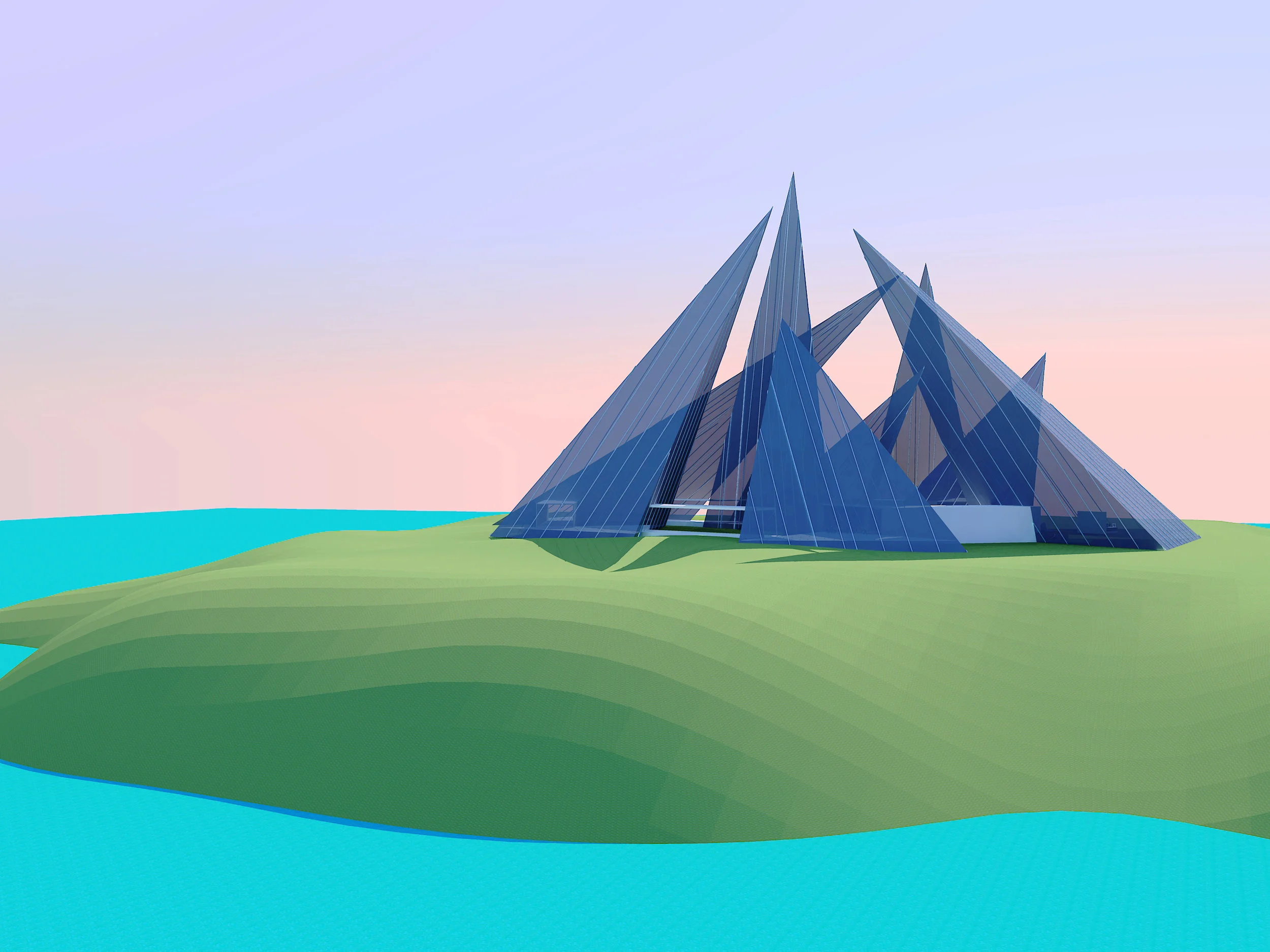
The project was designed around a simple program - an observation tower for Blacktown International Sportspark. Its purpose however, was to define a new iconic entry into Blacktown and to establish the Western Suburbs as the new heart of Sydney.
The form takes inspiration from Utzon’s Opera House, drawing upon indigenous Aboriginal imagery of the spearhead and the coolamon in order to create a distinct and memorable architectural monument.
Competition-Winning Entry // Architectural Design Studio 1 - UNSW.
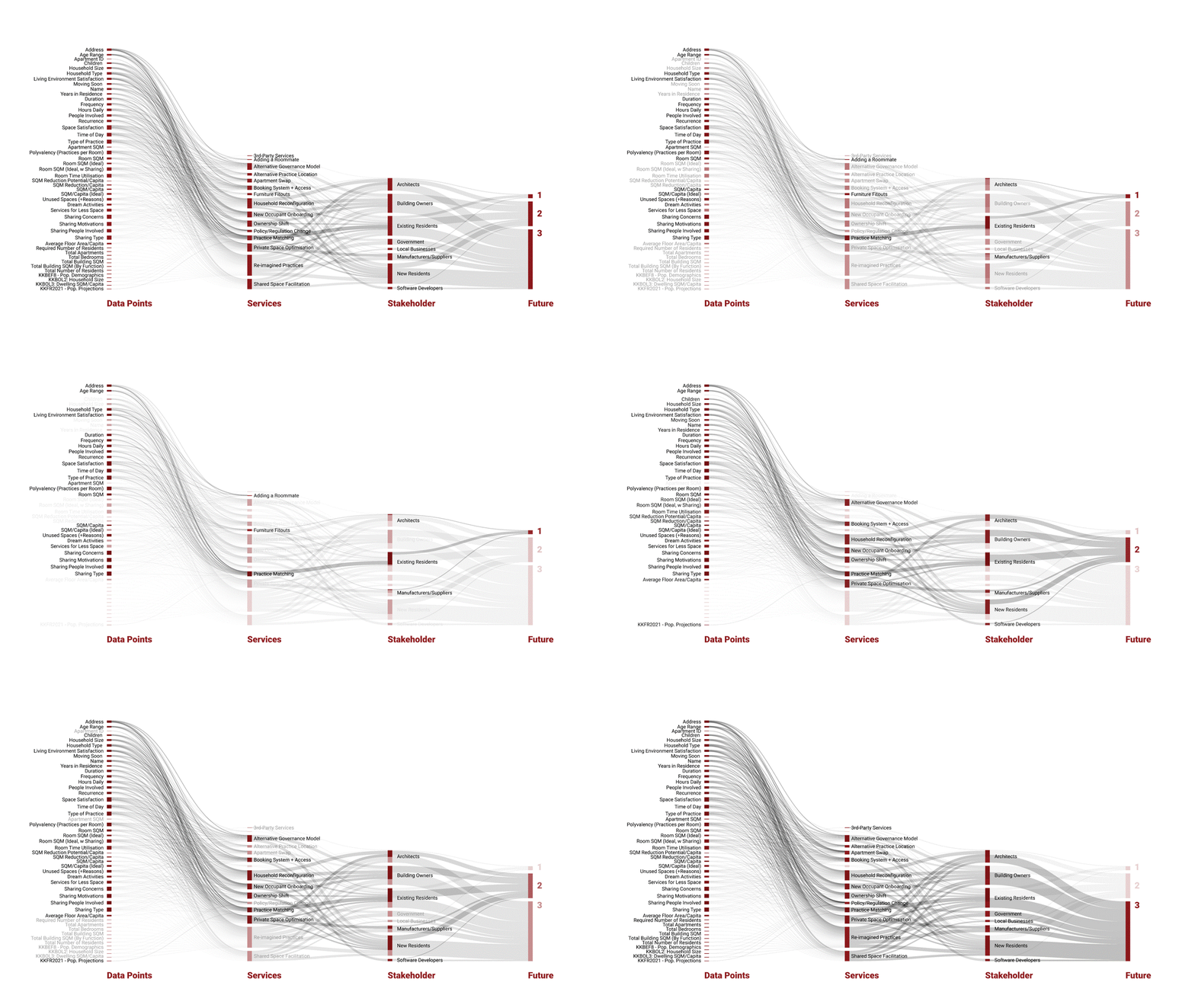
This project explores an emerging sustainability paradigm – from “efficiency”, to “sufficiency” - a state in which people’s basic needs are met whilst ecological limits are respected. In the built environment, ‘sufficiency’ aims to encourage a more thorough consideration of what is ‘enough’ space to meet our needs. And since residential buildings are the largest source of demand for built space and emissions within the construction sector - spatial requirements for dwellings represent a key opportunity for change.
Accordingly, the project was developed with two core deliverables:
The development of a digital post occupancy platform to analyse spatial behaviour in housing.
The design of a spatial intervention, adaptively re-using an existing household in order to improve “sufficiency” outcomes. This design involved a close real-world engagement with a 6-person student collective located in Nordvest, Copenhagen, as well as a number of other stakeholders on both a local and global level.
Global Agendas, Local Positioning // KADK+CBS - 5th Year.
Project 1 - Design Studio 5 // UNSW - 3rd Year.
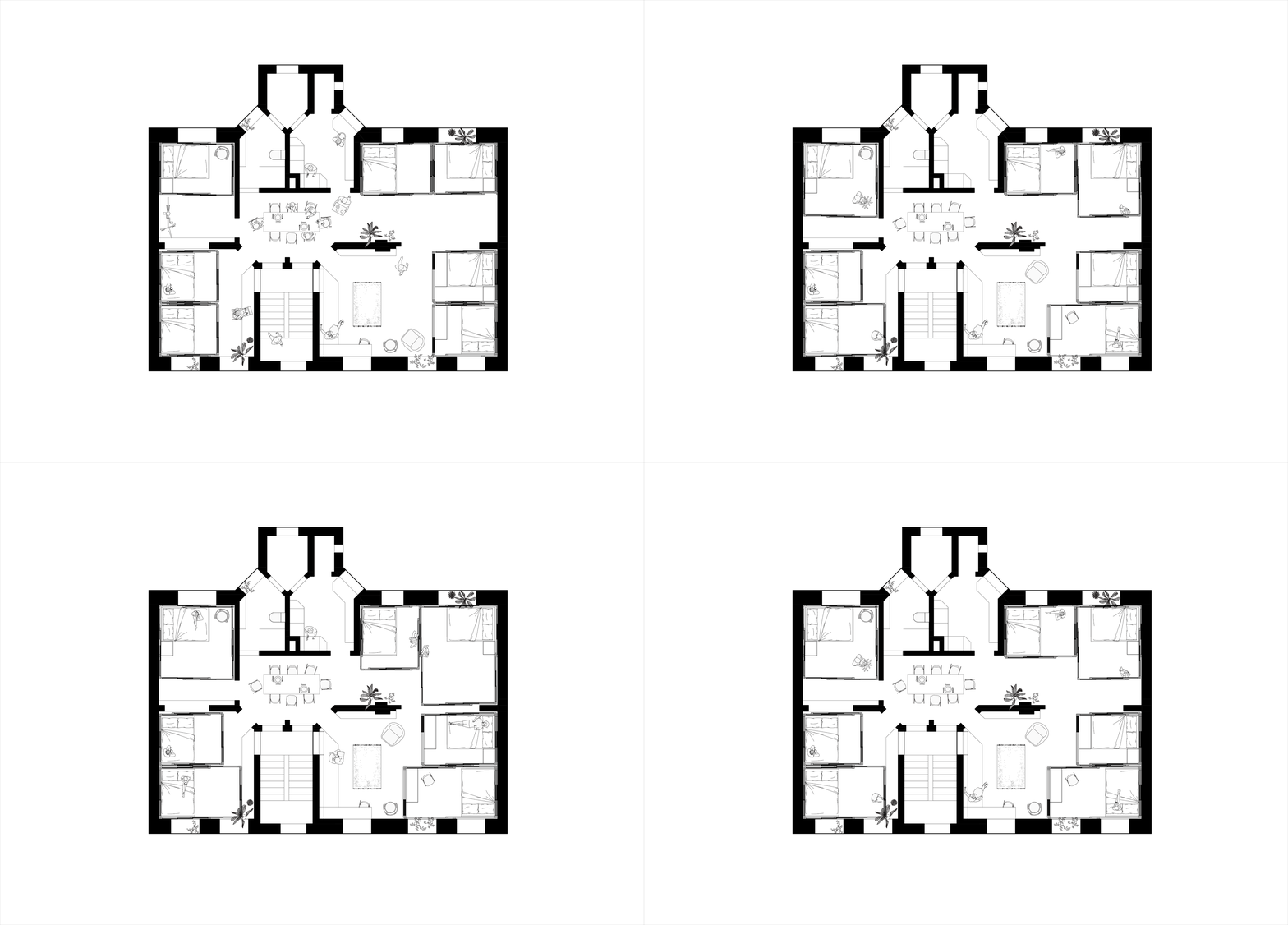
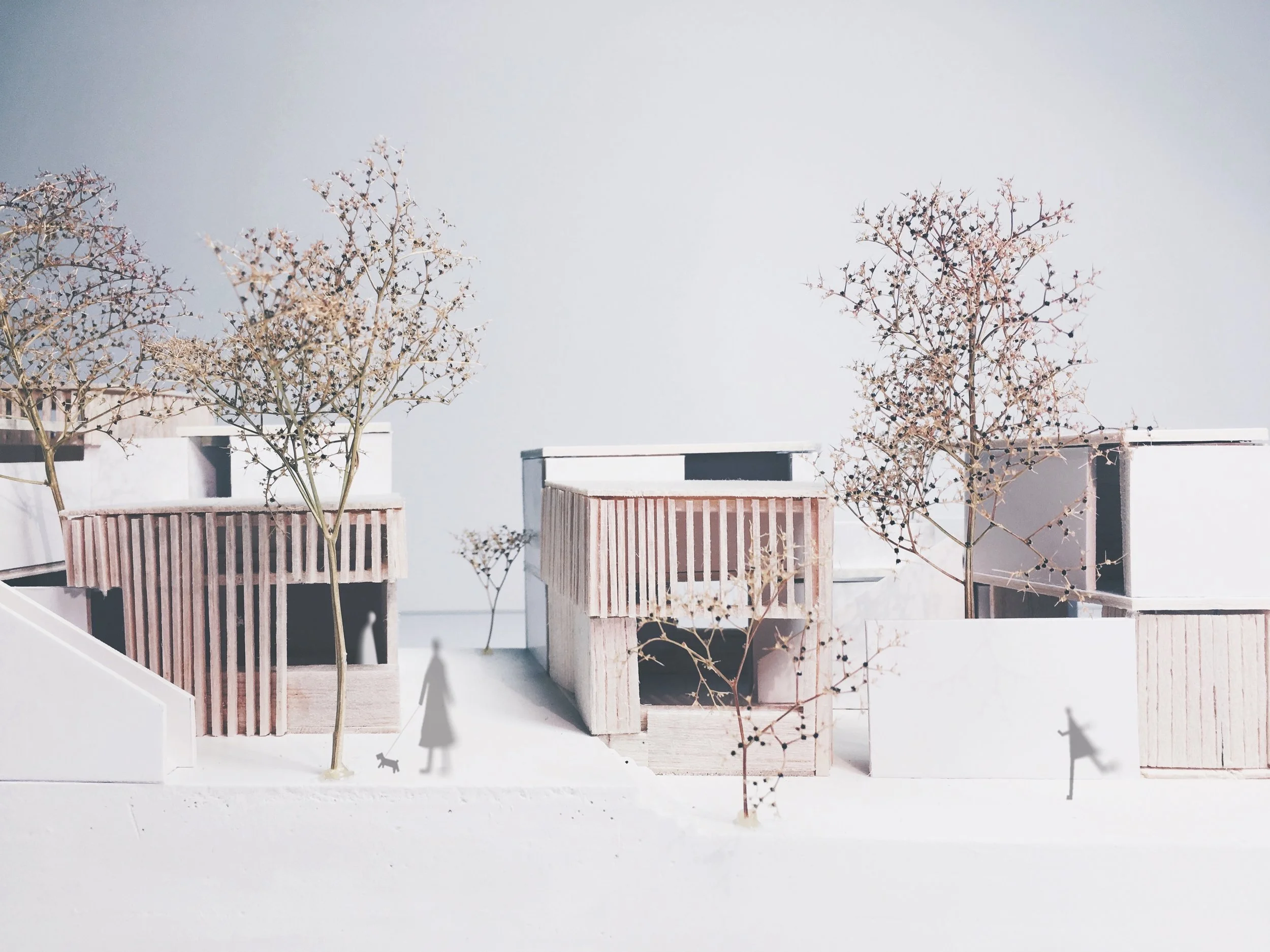
The project, a small co-housing development in the middle suburbs of Sydney, re-examines the potential for architecture to exist within a transitionary framework. Architecture and urbanism has traditionally been defined by permanence and absolutes as a default condition, but why should this be the case when change, adaptation and flexibility are now recognised as fundamental to balancing both the present and future needs of our modern society?
The three interconnected dwellings embody an architecture of dynamic transitions and thresholds, that which might more closely reflect the subtleties of human psychology. Hinged spaces allow selective control of privacy between dwellings, communal spaces and their occupants, hence facilitating healthy interactions, sharing and community beyond simply the open and closed.
Final Submission - Design Studio 5 // UNSW - 3rd Year.
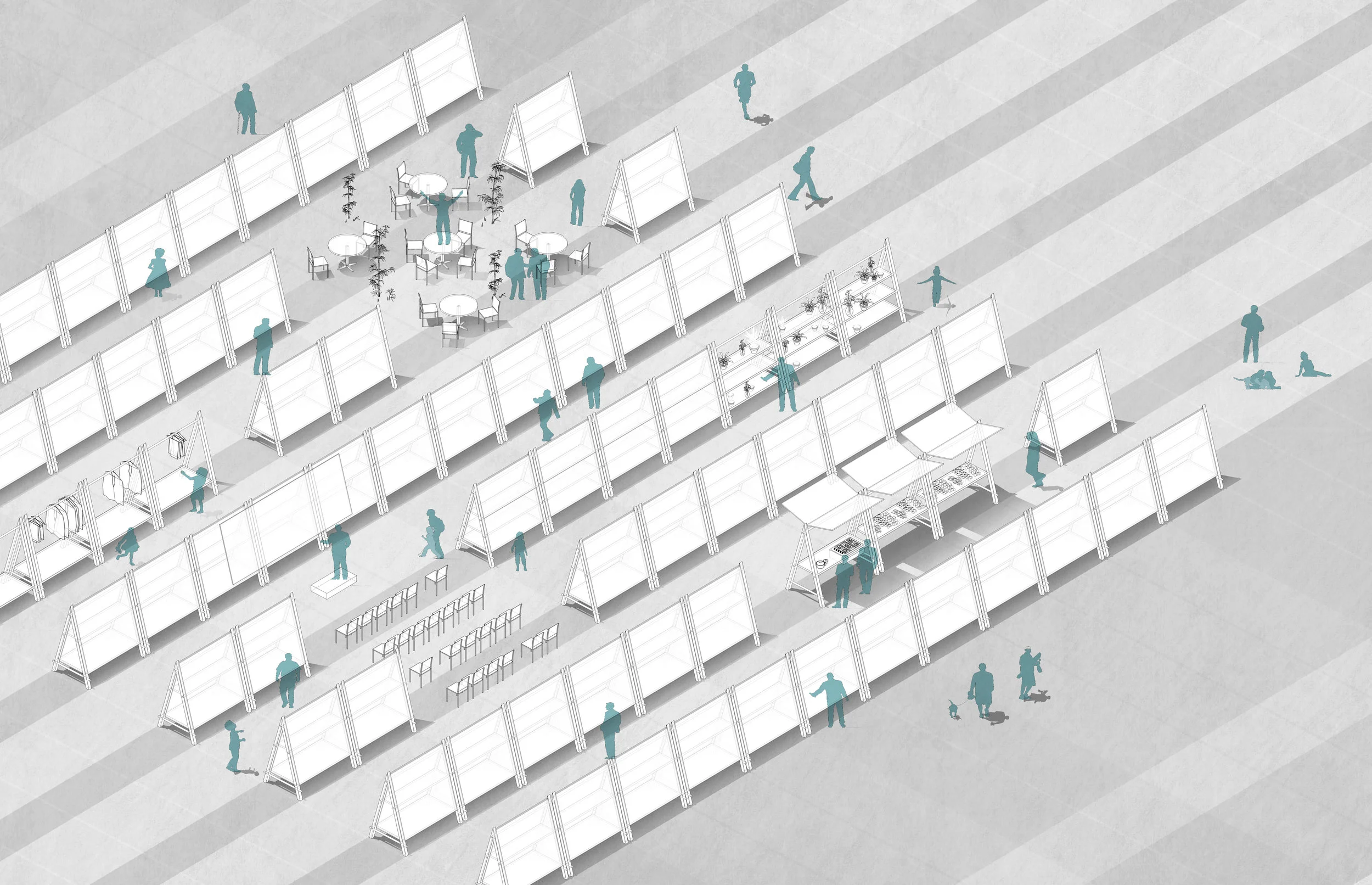
The project, in collaboration with a number of architecture students from Australia and China, involved the design of a mobile shelter for homeless individuals in Hangzhou. Our planet is in a state of crisis, with an estimated 100 million people homeless worldwide and over 2.5 million homeless in China alone. The brief was simple - design a temporary shelter for the homeless, and to tactically re-engage the relationship between them and the city.
A series of hybrid timber frame structures were proposed, functioning as both shelter for the individual, or becoming an arrangement of non-hierarchical spatial elements within the city. The flexible nature of the structures allows for art, freedom and creativity to become a vital way for citizens to engage with each other, solve problems and form relationships within the city.
The simple “A-frame” was chosen for it’s minimal use of material and also for it’s structural integrity on a range of scales/uses. Each tent structure is faced with a blank blackboard “canvas”, allowing for the inhabitants of the city to create pieces of art, write messages and share their stories. The operable walls can be opened up to allow for sleeping, lockable storage, shelving for markets or communal vegetable gardens, a picnic table, or could even be assembled to form places for play. Simple timber dowel joints with no glue allows for easily dismantling the structural system for transport between cities, and also allows for the sustainable re-use of all components.
The pavilion can be arranged to fit in any context, with the potential for use as an open lecture theatre for all members of the public, an outdoor classroom, an art exhibition or a marketplace - the spatial potentials are limitless. When the pavilion is no longer being used, each separate tent structure can be donated and relocated to individuals across the city in need of secure storage and shelter.
“Architects can’t force people to connect, it can only plan the crossing points, remove barriers, and make the meeting places useful and attractive.” - Denise Scott Brown
Mobile Architecture for Homeless Individuals // Hangzhou, China.
Collaborators: Nettie Ni, Han Xiao, Yicheng Zhang.
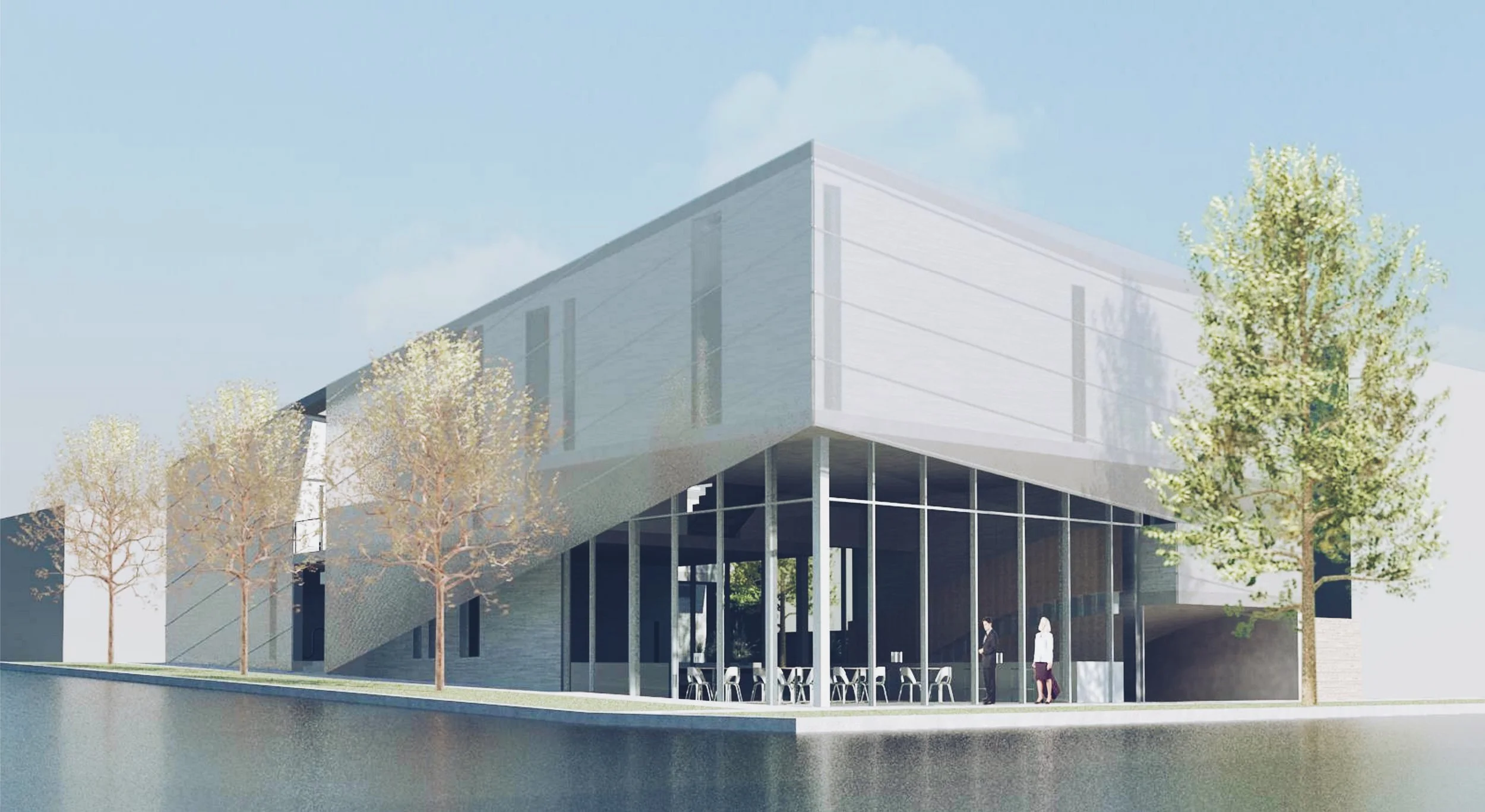
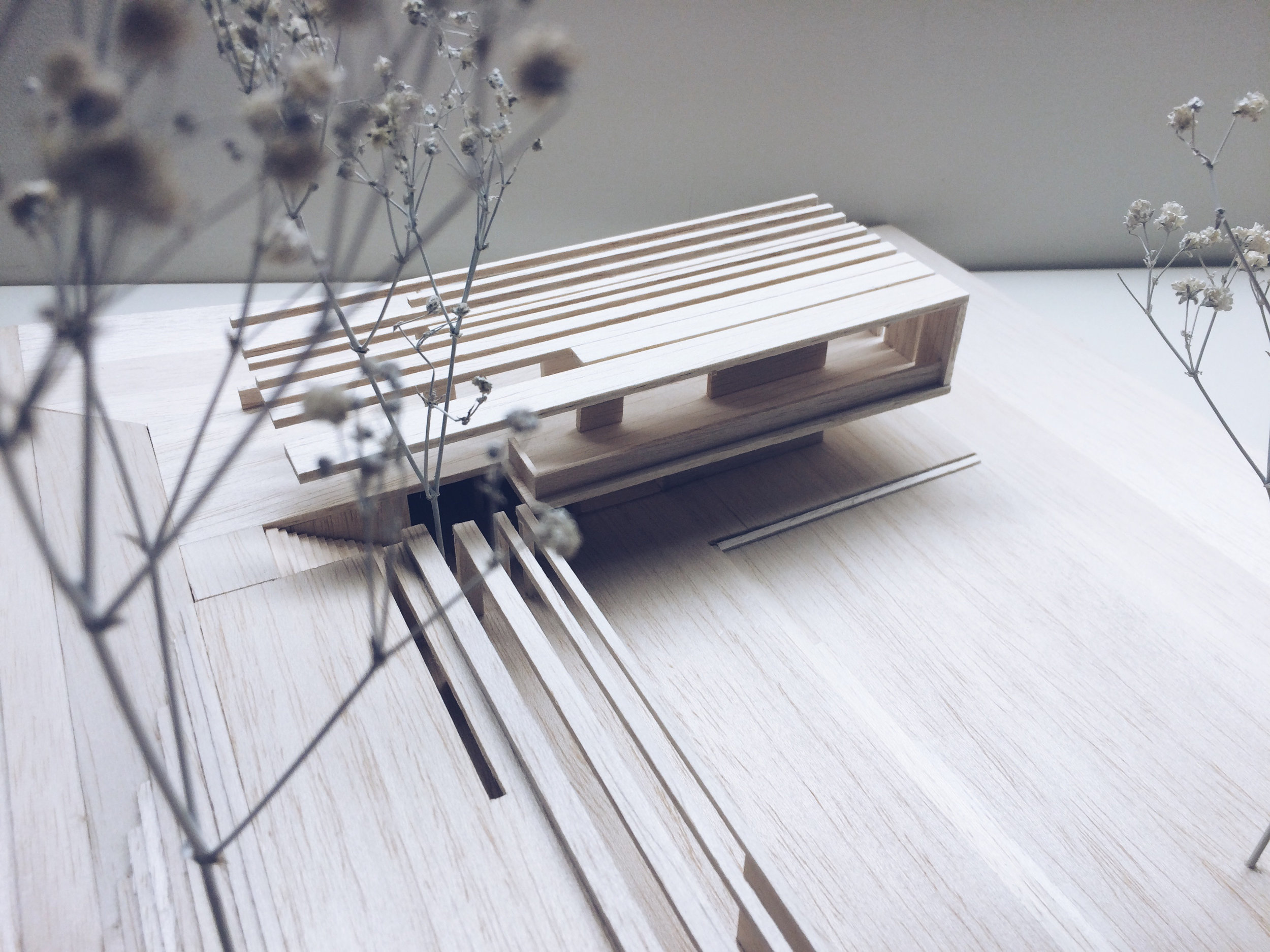
The design of a small kiosk, bike workshop and art gallery space is sited in the Sydney suburb of Woolloomooloo. The project becomes an extension of the “urban alleyway” from the harbour to the north, and a culmination of the journey from the CBD street bike route. Hence the site is a significant point of convergence for urban interaction.
The lightweight timber upper floor exhibition space opens to the bustling urban surroundings with a simultaneously discrete program underneath. The sandstone lower floor gallery space, bike workshop and kiosk derives its materiality from the local Sydney landscape, drawing people into the open court to pause and relax throughout the day.
Project 3 // Architectural Design Studio 2 - UNSW.
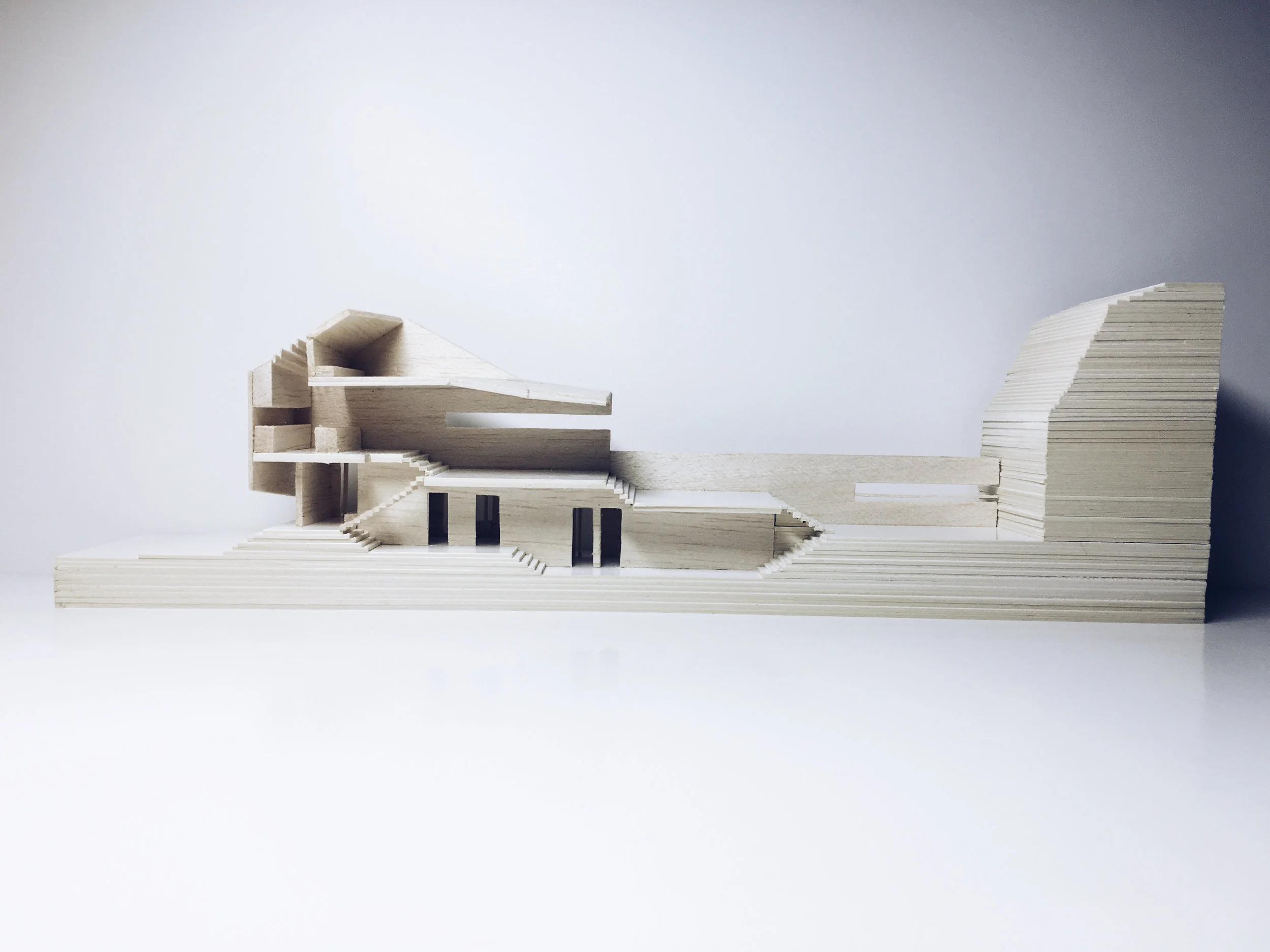
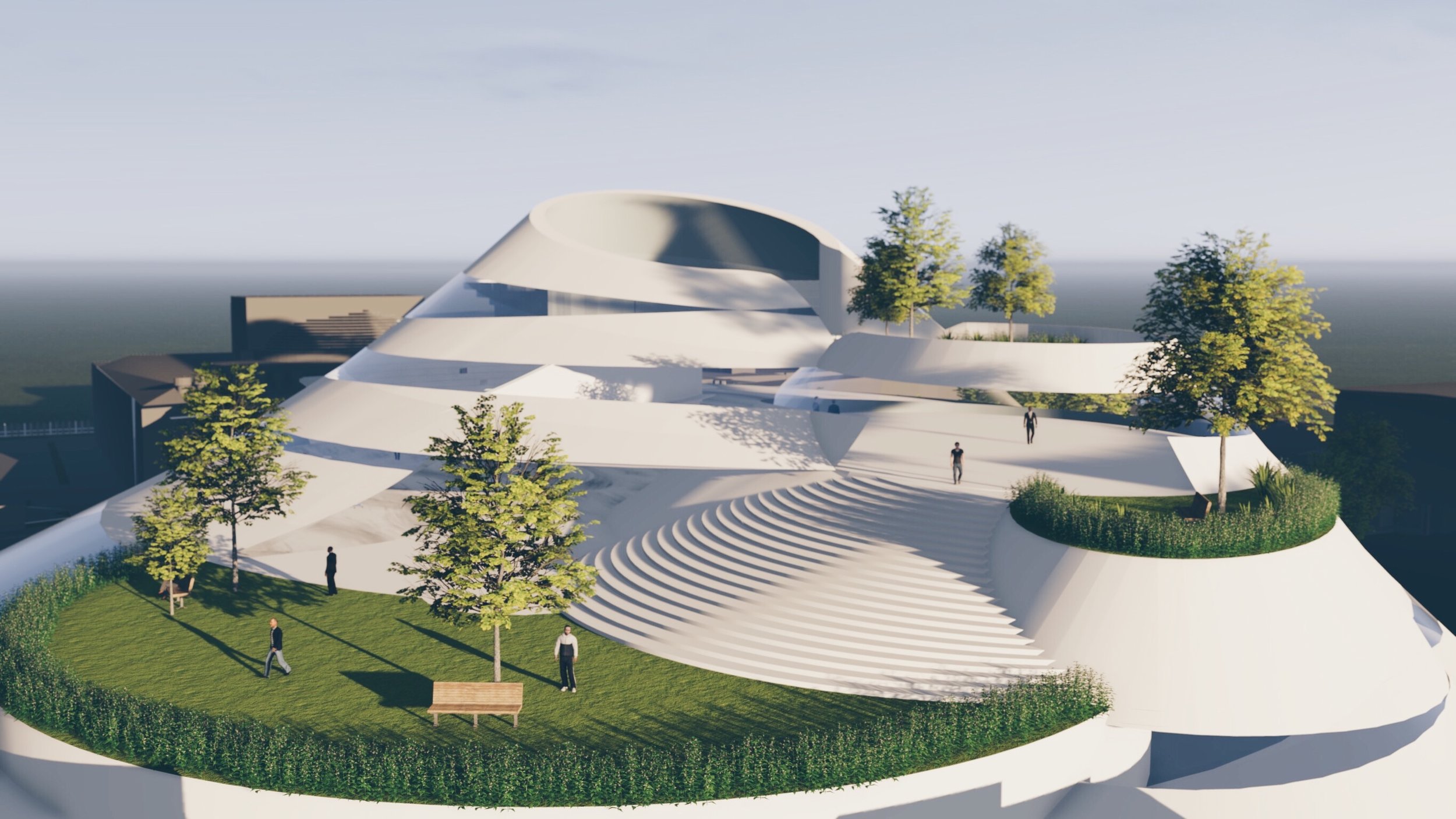
The new redevelopment of the UNSW Lower Campus Architecture School brings with it an opportunity to bring together art, performance and design by bridging NIDA and UNSW. Mixed-use and adaptable spaces maximise collaborative learning and cultural diversity between two close neighbours.
A series of tiered spaces operate both vertically and horizontally in order to promote chance interaction and collaboration between students. Like a mountain, it naturally acts as wind block, reduces noise within the rest of the campus, and allows rainwater to filter down into the "green spaces" without the need for irrigation.
An operable rooftop theatre with actuating seating can allow the space to remain as a lecture theatre in winter, and as an multipurpose open-air theatre for NIDA performances and practices and exhibitions in summer.
Project 3 // Architectural Design Studio 1 - UNSW.
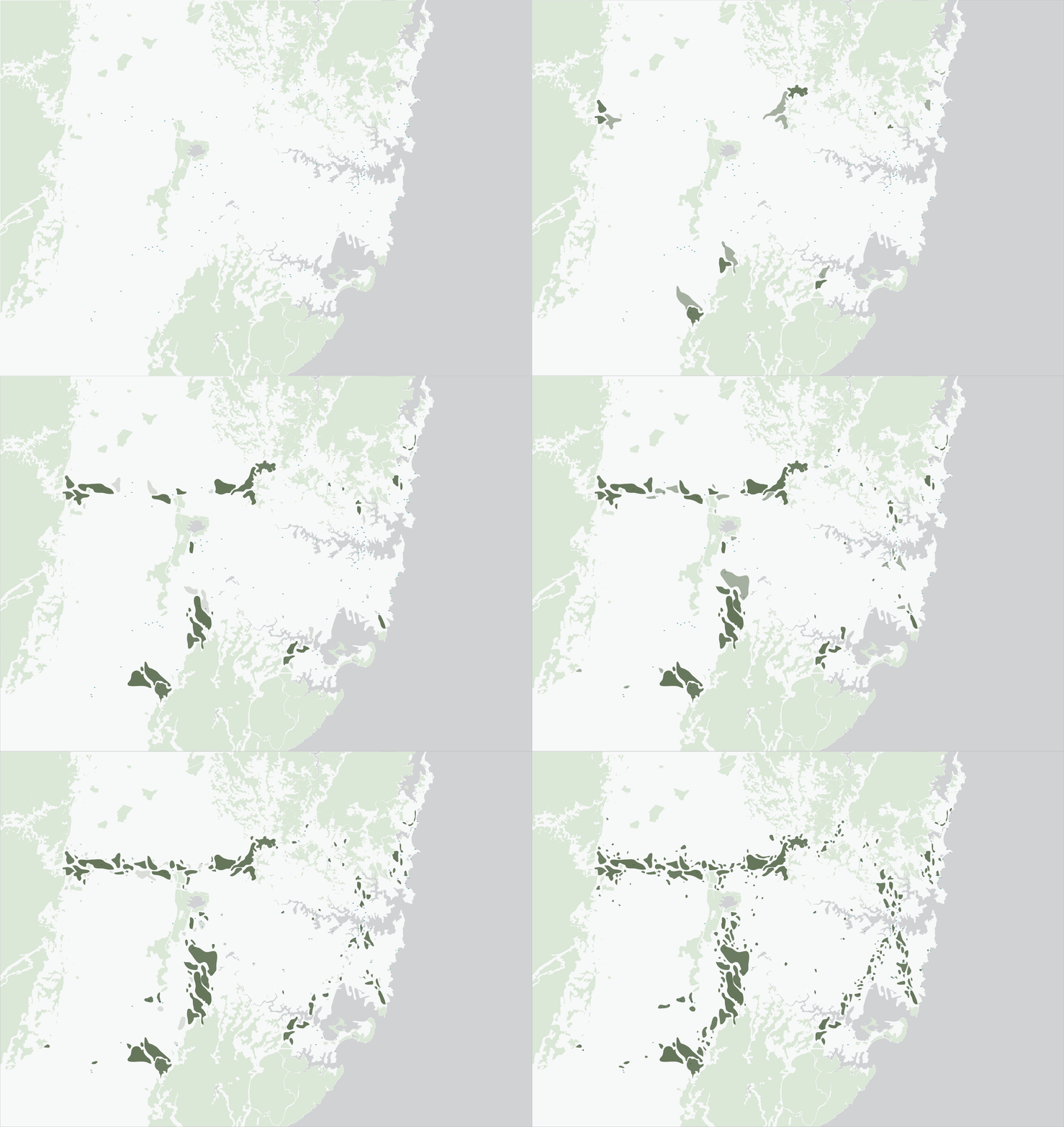
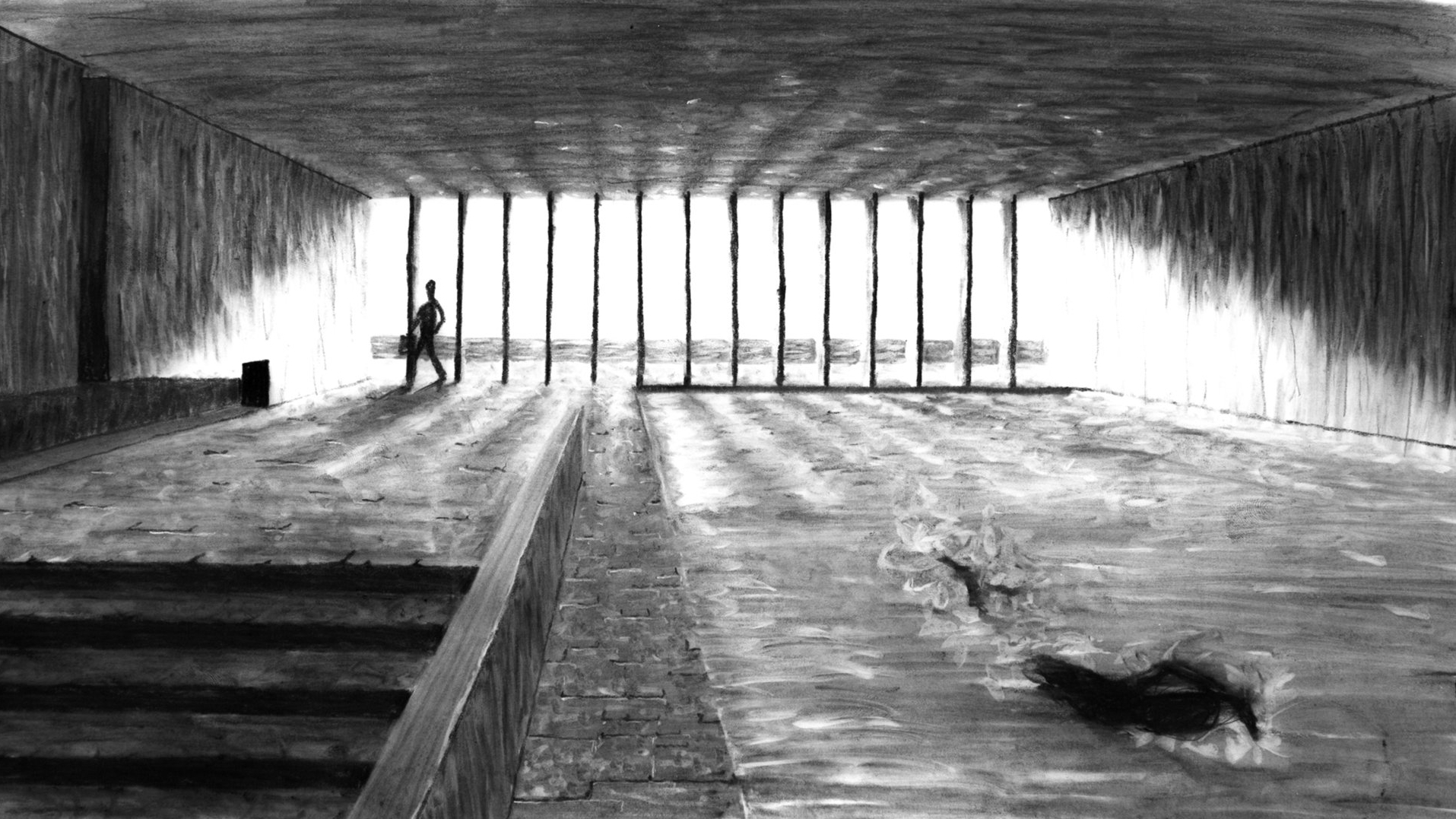
The project was a collaboration between 5 UNSW students in order to redevelop an urban masterplan for the island of Sant Elena, Venice. The design question - how could an architecture engage and raise awareness of the Venetian rising tides, and with the long term sustainability of the city?
The two lowest points of the site became a critical axis, as it allowed the greatest interaction and exploration of the fluctuating tides. Along this axis a key pedestrian link through the city is proposed, tying together both an indoor and outdoor public pool and a local bathhouse. An underground swimming canal along the same axis reveals the underground landscape of the Venetian piles.
The housing element of the program becomes an extension of the fine grain of existing urban fabric to the south, with no real distinction between the old and the new. Within this is 70% private housing, and 30% social housing in order to match the highly successful model in Vienna. The housing blocks are arranged as loosely defined courtyards reminiscent of the Venetian urban morphology, and located around the existing trees.
Seidler International Design Studio Venice // 3rd Year - IUAV.
Collaborators: Joshua Sleight, Sasha Lesiuk, Luke Walker, Layla Kia.
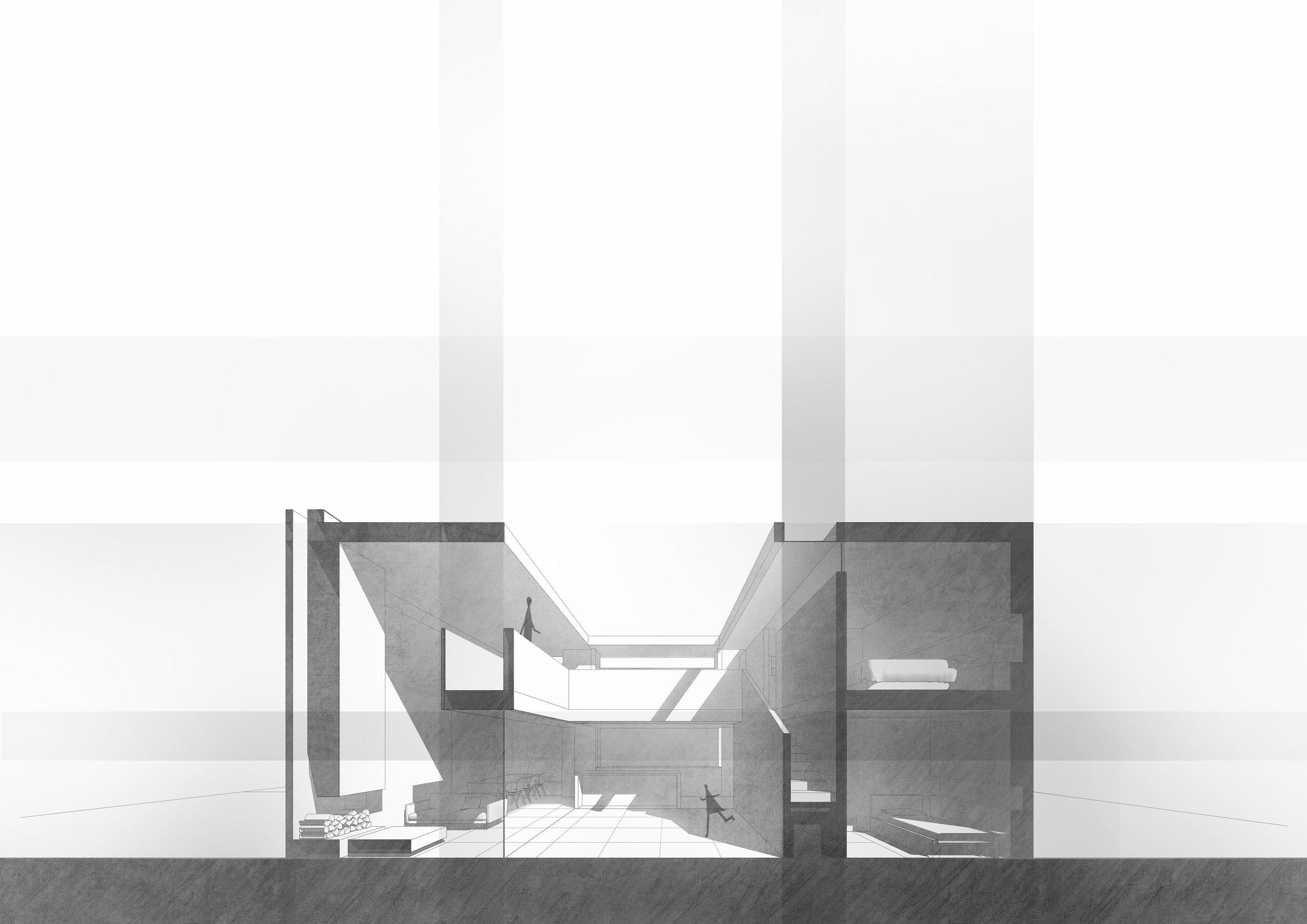
Architecture can be perceived as a series of relationships between surfaces, objects and spaces in relation to a datum. The project explores these relationships through an interconnected gallery space for two clients - Hazan Motorworks and Christian Benner Custom.
Basic architectural conventions such as the stair, wall and roof are challenged, as are the ambiguous relationships between space and the ground plane.
Project 1 // Architectural Design Studio 1 - UNSW.